Thursday, 3 February 2011

EDF Energy Last of Big 6 to Raise Domestic Energy Prices

EDF Energy is to increase gas prices by 6.5% and electricity prices by 7.5% from 2 March, the company has said.

The company is the last of the "big six" energy firms to increase prices, and it follows a heavily-promoted decision to freeze prices over the winter.

EDF blamed wholesale costs and other charges for the change.

Energy regulator Ofgem is currently investigating the prices charged to domestic customers.

Price changes

The move from EDF comes the day before E.On's price change comes into effect. E.On's customers will be subject to an average 9% increase in electricity prices and a 3% rise in gas prices.

In the last week of November, Scottish Power increased electricity bills by an average of 8.9% and prices for gas customers increased by an average of 2%.

Scottish and Southern Energy followed by putting up its domestic gas tariffs by 9.4% at the start of December.

The 7% rise in gas and electricity bills for British Gas customers started on 10 December.

Npower customers saw their gas and electricity bills rise by 5.1% on 4 January.

http://www.bbc.co.uk/news/business-12359722 - for further details

Tuesday, 4 January 2011

VAT Increases and Exempt Businesses.

The Standard rate of Value Added Tax (VAT) rose today from 17.5% to 20%.

In line with curent legislation, there are two rates of VAT applicable to the supplies of electricity and gas used for business and non domestic purposes.
  • Standard rate
  • Reduced rate

Where an electricity or gas supply is used wholly or partially for domestic or charitable non-business use, that part of the supply qualifies for the reduced rate of VAT. This is known as 'qualifying use.'

Examples of businesses which can qualify for reduced rate VAT on the ground of domestic use include

  • Self-containned duelling such as houses or flats (applicable to pubs)
  • Job-related accomodation (vicarages, manse etc)
  • Monastry, nunnery or similar
  • Residential accodation for Armed Forces
  • Residential Homes for children, old people etc
  • Hospice or palliative care
  • Caravan parks / holiday accomodation
  • Shower blocks
  • Staff accomodation in hotels etc
  • Residential accomodation in school
  • Ancillary rooms used by boarders
  • Landlord supplies

In addition to the domestic usage as listed above, certain other types of supply are considered to be non-business usage and charged at the reduced rate

  • Charities
  • Churches and other places of worship
  • Village halls / community centres / leisure centres etc
  • Educational establishments

Within each catorgory there are rules governing what activities are governed by the regulations, not all businesses will qualify and it is also possible to have mixed usage where a proportion of the energy bill is charged 20% for VAT and the rest is charged at 5%.

It is very important for anyone running a business or commercial or charitable activity, as listed abot to consult their accountant for advice or FREE ADVICE can be given on this subject by calling John at Phoenix Energy on 07974 387 218 or 0800 458 64 60

Now that the VAT rate has changed it is more important than ever to ensure that your organisation is paying the correct rate, particularly if you do not have provision to reclaim VAT.

All businessses using less than 12000 kWh / annum of electricity or 73200 kWh /annum currently pay rate at the reduced rate.

Monday, 3 January 2011

New Year's Resolution Anyone?

Happy New Year to Phoenix Energy customers old and new.


A new year is often the time for people to make New Year's Resolutions - lose some weight, stop smoking, get fit - but probably the most common resolution is to save money! Most of the big 6 energy suppliers, and a few small ones, have recently treated us to a round of pre-Xmas festive price rises - very seasonal of them! Combined with the worst December weather for 120 years mean that millions of people will get nasty suprises when the electricity / gas bills arrive on doormats shortly!


Phoenix Energy offer our domestic customers a way to cut their energy bills. It is probable that anyone who has never switched, would be able to pay even less money than last year, despite the price hikes. We offer a range of fixed, capped, internet only, green energy and pre-payment deals to suit every customer, however large or small their bill and however the customer wishes to pay. Our domestic site is called GET ME CHEAP BILLS . COM and can be accessed via this link


http://www.getmecheapbills.com/


For business customers, without the price protections afforded to domestic customers, the price rises have been much more steep. Another effect of the business market is that many businesses sign long energy contracts of 3-5 years and anyone coming off a fixed contract in the last year will have had to renew at a significantly higher price than previously obtained.


The graph above shows wholesale gas costs, which is one of the main factors affecting energy prices.


I have tabulated below the typical aquisation tariff for one of the leading energy suppliers for a typical small business customer over the last year.


March 2011 - 10.69p
December 2010 - 10.45p
October 2010 - 10.35p
July 2010 - 8.70p
April 2010 - 8.78p
December 2009 - 8.92p


There are many types of business electricity meters and different rates across the country, and sometimes a supplier is more competitively priced at certain periods of the year but the overall price rise is 16.5% between the dates shown, (with a small decrease in the summer) follows the market trend and should be indicative of future energy costs.


Phoenix Energy offer a range of different suppliers and also different tariff lengths to meet the needs of all UK businesses.


To obtain a no - obligation price quote, for up to 120 days ahead please call 0800 458 6460


Please also use this number for any other queries or information.


If your contract is not due to expire yet please contain us for details of how we can help you with your energy renewals and to ensure that you handle the termination process correctly to avoid being 'rolled over'. We offer a free of charge service to our customers and can contact your supplier on your behalf to facilitate a trouble free transfer.

Thursday, 2 December 2010

Fears Over Record Gas Bills In Cold Weather

Households face the possibility of further rises in their energy bills, after the cold weather that has struck the country caused gas prices to rise to the highest level for 18 months.

The National Grid has reported a significant increase in the demand for power as many parts of Britain have been experiencing unprecedented low temperatures for this time of year.

Demand for gas yesterday was 25 per cent more than it was at this time last year and the third highest daily amount on record, as households and businesses turned up their thermostats.

The surge in demand caused concern in the wholesale markets, with the price of gas jumping 11 per cent to 62p per therm – the highest level in 18 months.
Electricity also surged ahead in price, climbing to £71.25 per megawatt-hour, up from £55 the day before – the highest level in two years and up two-thirds since the beginning of winter.


Experts gave warning that as a result households face the possibility of record energy bills, as they turn up their heating, plug in electric heaters and stay at home.

There were also fears that not only could consumers use more gas, but they could pay more through companies putting up their prices.

The so-called "spot" prices in gas and electricity – which jumped yesterday – are the price companies pay for immediate delivery.

Though companies buy the bulk of their supplies on the forward market, by buying contracts guaranteeing delivery in three or six months' time, they rely heavily on the spot market to cover short-falls caused by sharp jumps in demand.
Experts yesterday warned that a prolonged cold spell could have an impact on domestic power bills.

The current average annual household energy bill – including gas and electricity – is £1,228. This is slightly lower than the record it hit during January 2009 when they reached an all-time high of £1,293, but nearly double what they were five years ago.

The majority of experts fear that there are more energy price rises to come. This winter three of the big six energy suppliers have announced bill increases, with most kicking in yesterday at the start of the month and as the cold weather started to bite.

One supplier, EDF, has promised not to raise their prices until March 2011, but the remaining two, E. On and Npower are widely expected to increase their tariffs if not in the next few days, then certainly after Christmas.

Not only are the remaining three suppliers expected to increase their tariffs, but the fear is that those who have already moved could put up their prices once again. In 2008 all of the suppliers put up their prices on two separate occassions, within three months of the first rise.

The more immediate fear is that consumers will have to pay far more for their energy this month than at any other time, because they are using far more to keep warm.
According to Energyhelpline, a price comparison site, in the last three days the average household has consumed 47 per cent more energy than normal for this time of year.


In January 2010, when temperatures plummeted in a similar fashion to this week, Britain's reserves of gas fell substantially. National Grid had to impose gas rationing on some companies, such as car factories.

Most believe that the country is in a better position this winter, however market insiders expressed surprise yesterday that European companies started to buy gas that was held in British storage facilities, sending gas across the Channel through the pipeline known as the interconnector.

Last week Ofgem, the industry regulator, launched an investigation into the major gas and electricity suppliers, after it calculated that companies were making £90 per profit from each customer on an annual basis, a jump of 38 per cent over the last three months. It said it wanted to check if firms were "being straight" with its customers.

Some said that this investigation would make it very difficult for energy companies to put through price rises without incurring a political backlash.

Gas is used to heat about 80 per cent of homes and to generate about half of the country’s electricity.

Business customers should call 0800 458 6460

Domestic customers can save money by visiting this site http://www.getmecheapbills.com

Friday, 12 November 2010

British Gas Price Increases

British Gas customers will face a 7% rise in gas and electricity bills this winter, the company has announced.

The increase, which comes into effect on 10 December, was the result of rising wholesale prices, it said.

The rise affects eight million customers, but the company added that its 300,000 most vulnerable customers would initially not be charged more.

British Gas has become the second major UK energy supplier to announce price increases for the winter months.

It said that wholesale gas prices had risen by 25% since the spring.

"We know that rising energy prices come at a difficult time for many," said British Gas managing director Phil Bentley.

The company said prices for those on a typical dual-fuel deal would go up by £1.50 a week.

Vulnerable customers on the "Essentials" package with British Gas will have prices held until 1 April 2011.

Full details can be found at the BBC website. http://www.bbc.co.uk/news/business-11741766

It is likely that the other 'Big 6'and the smaller suppliers will take this opportunity to increase energy costs for their customers. Southern Electric (SSE) have already increased their gas prices, although EDF have announced that they do not intend to raise prices before the winter ends.

Phoenix Energy recommend that domestic customers sign up for a fixed price deal at our comparison site before the prices of the best fixed tariffs raise again.

http://www.getmecheapbills.com

Friday, 29 October 2010

First 'Big 6' Domestic Energy Rise in 2 Years

Scottish and Southern Energy (SSE) is putting up its domestic gas tariffs by 9.4% at the start of December.

The company, one of the UK's biggest energy suppliers, said the rise would affect 3.6 million customers.

The company blamed the increasing wholesale cost of buying gas which it said had gone up by 25% since March this year. The company said it was sorry that the higher bills would come in during this winter.

"The last few months have been marked by rising wholesale gas prices and, having absorbed losses in our gas supply business for some time, we can not delay an increase in retail prices any longer," said Alistair Phillips-Davies, of SSE.

"I am sorry it will take effect during the winter period." Those affected include 380,000 customers in Scotland and 440,000 customers in Wales.

Price effect
The company said that people were being more careful with their energy consumption, so it calculated the price rise would be £4.64 a month for the typical customer, or £56 a year.
However, taking regulator Ofgem's standard consumption measure, the effect would be a £5.60 a month rise, or £67 a year.

This is the first time for two years that standard prices among the "big six" energy suppliers have risen, and follows some price falls during last year.

After 1 December, SSE customers with a dual-fuel tariff would still be paying bills that were £33 cheaper than when prices were at their peak in January 2009, said Ann Robinson, of Uswitch, but she said the timing was a concern for customers.

With winter about to kick in, this is a body blow for consumers. What nobody wants to see is a repeat of 2008, when suppliers last put prices up and bills rocketed by £381 or 42% as a result," she said.

There could be more bills rises to come.

Earlier this month, Ofgem said that gas and electricity bills would both have to rise by £3 a year, as £32bn was needed to improve the UK's distribution infrastructure. Ofgem said energy firms needed to spend that sum over the next 10 years to "keep the lights on" and meet the government's green energy targets.

Other suppliers

Customers of the other major energy providers will have to wait to see if the rest of the industry also puts up prices.

"While we hope that other companies do not follow suit, history has shown us they adopt a pack mentality on pricing," said Audrey Gallacher, of watchdog Consumer Focus.
The watchdog has argued that companies should have reduced prices when wholesale costs were lower. It claimed that SSE's gas prices had fallen by 2% since wholesale costs peaked in 2008, while the wholesale gas price had declined by more than 40%.

A spokesman for the Department of Energy and Climate Change said: "While, on behalf of consumers, we are disappointed in the decision taken by SSE to increase their gas prices, this is a decision for the company which must compete for customers in the marketplace.

"Consumers should therefore continue to assess regularly whether they are getting the best energy deal for them and to take steps to switch supplier and tariff if not."

(article courtesy of BBC)

Domestic customers should check their own energy and see if they are getting a good deal by checking http://www.getmecheapbills.com

Sunday, 24 October 2010

Utility Supply and Metering Work

One of the areas in which Phoenix Energy specialise is the provision of utility supply to new build, refurbished and converted buildings.

We organise everything from the initial applications, organising quotations and payments, organising site visits and the scheduling of work to meet our clients requirements. Finally we organise meter appointments and register the meters to the appropriate company, indevidual or organisation. Phoenix Energy have organised over 800 metered supplies at dozens of site, predominately across the North East but also in Yorkshire, London and Manweb areas.

Working with the utility infrastructire providers can be very tiring and stressfull and we take away alot of hassles from architects, site managers, foremen, contractors and site owners - allowing them to do what they are good at (and are paid for!) building houses and making money.

I have used photos from 2 of our sites to illustrate what we do. The first site shows a small developement of 5 houses in Teeside - this job had stopped because of the recession but my client finished off the building of these houses - we organised all the utility and metering work.


Before. After


The second set of photos shows an onging development of barn conversions into 10 luxury houses in Co Durham. This site is ongoing and now the utilities are provided to the site, the plots will be indevidually sold and completed as self-builds, but with utility provision.


Site Distance from main road
One of the main problems, logistically and in terms of cost was the distance of the development from the utility networks, approx 500 m. All utilities supplies had to be placed in field to left of access road.

before work work ongoing

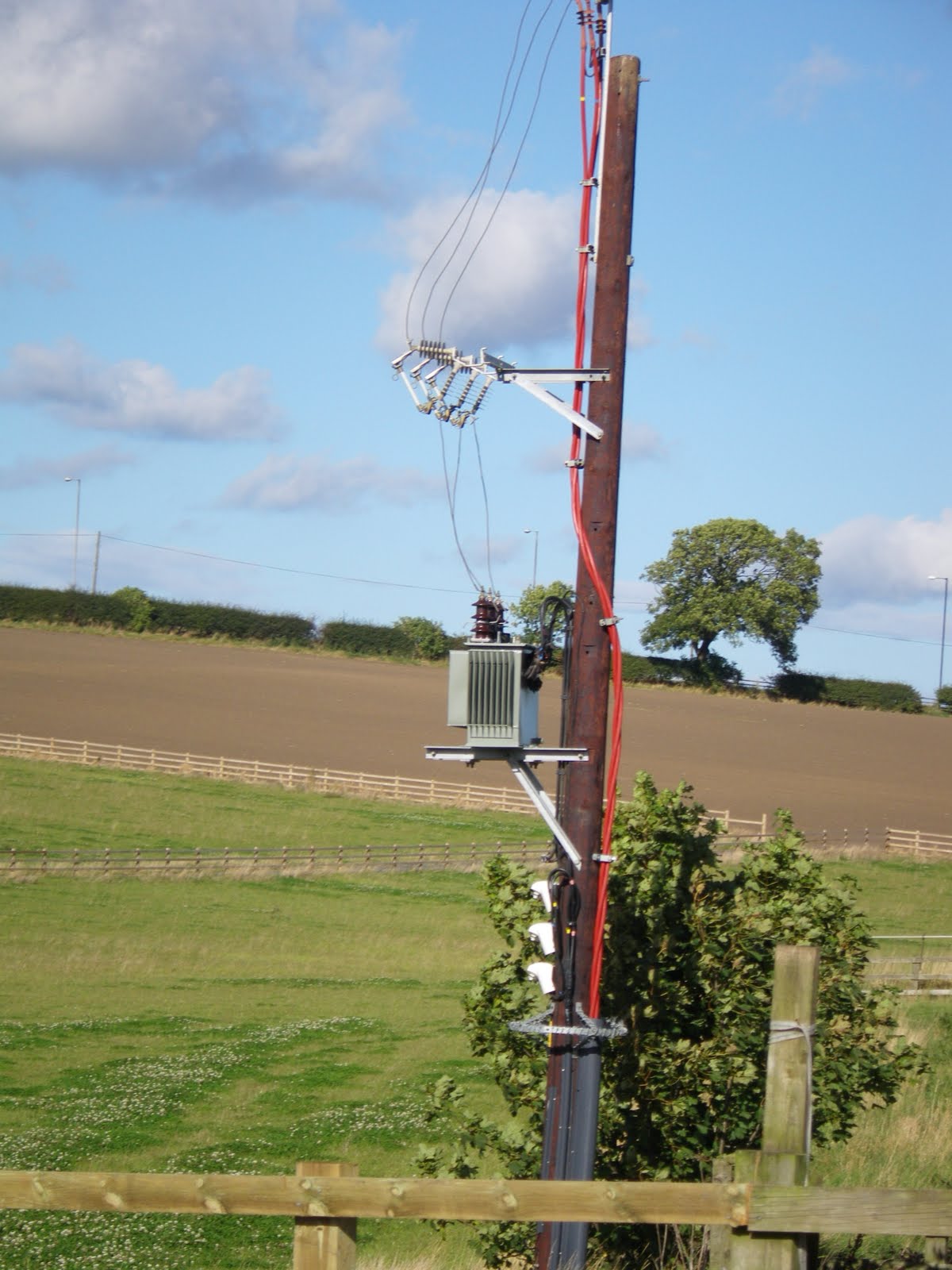
Street lighting New electricity transformer
Landlord supply for site 63mm gas main
The main road and the distance from the road can be seen in the above photo.
water supply added to trench before backfilling.
first house first house completed - (the gas and water service piping can be seen in the foreground)
The Phoenix Energy consultancy work on the above 2 projects assists the developers in the completion of their property developements. This compensates for the cost of the work many times over as any problems or delays with the utilites can have major effects on the construction timetables, leading to massive cost overruns.
We can be contact for this type of work on 0800 458 6460 or direct to John Lewins on 07974 387 218.